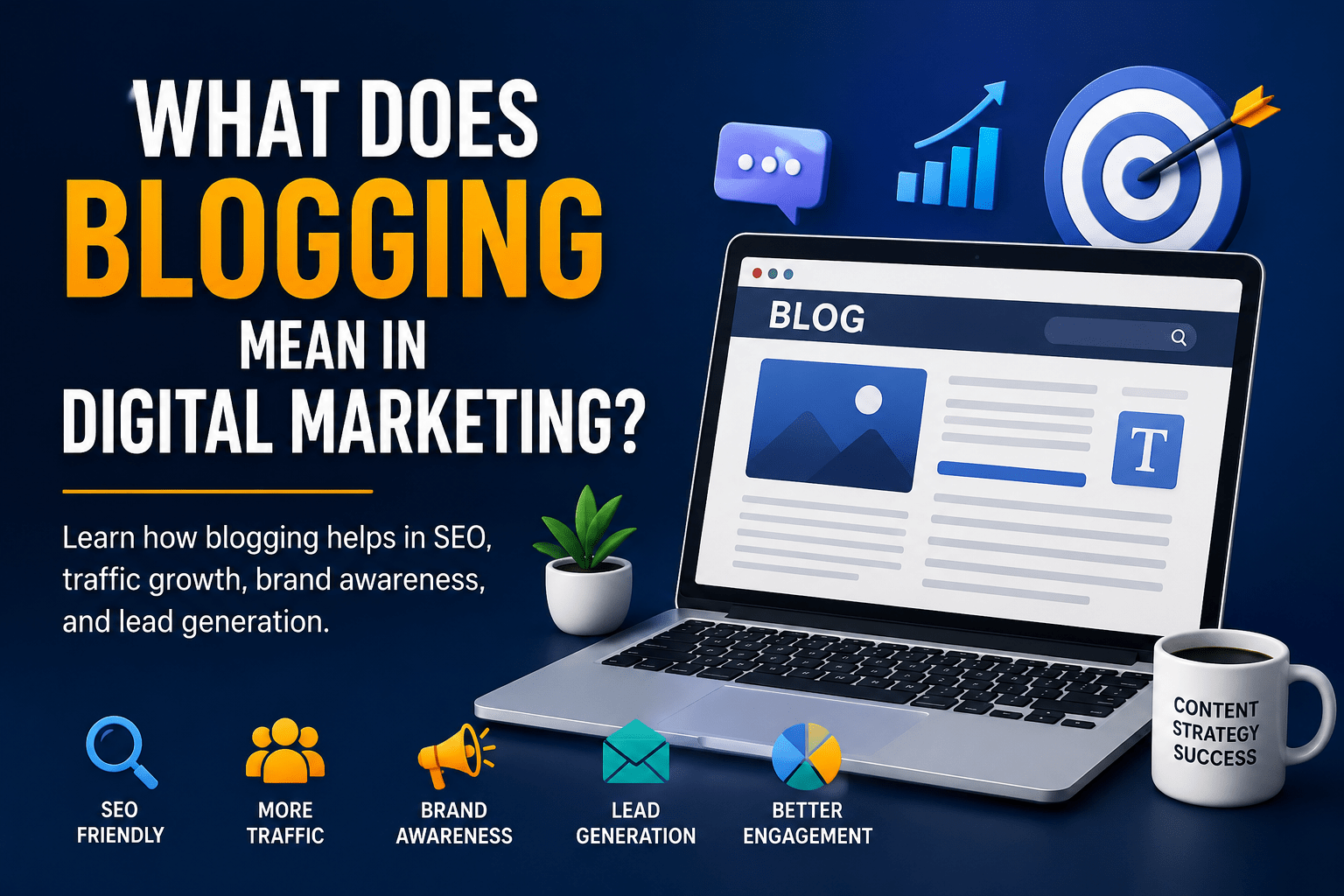
Blogging in digital marketing refers to the process of creating and publishing content (articles, guides, or posts) on a website to attract, inform, and engage an audience. It is one of the most powerful ways to build online presence and connect with potential customers.
In simple words, blogging is not just writing—it is a strategy used by businesses to bring traffic, generate leads, and build trust with users online.
Why Is Blogging Important in Digital Marketing?
Blogging plays a major role in digital marketing because it helps businesses grow organically. Instead of spending money on ads all the time, blogs bring long-term traffic from search engines.
Here are some key reasons why blogging is important:
- It improves your website’s visibility on search engines
- It helps build authority in your niche
- It generates organic traffic
- It supports social media and email marketing
- It helps convert visitors into customers
A strong blog can work as a long-term asset for any business.
How Does Blogging Help in SEO?
Blogging and SEO (Search Engine Optimization) go hand in hand. Every blog post you publish gives your website a chance to rank on search engines like Google.
When you write blogs using the right keywords, structure, and valuable content, search engines understand your website better and show it to users searching for related topics.
Benefits of blogging for SEO:
- More indexed pages on Google
- Targeting multiple keywords
- Improved website ranking
- Better internal linking
- Increased dwell time
In short, blogging is one of the easiest and most effective ways to boost SEO.
What Type of Content Is Used in Blogging?
Blogging content can be created in different formats depending on your audience and goals.
Common types of blog content include:
- Informational blogs (like “What is digital marketing?”)
- How-to guides (step-by-step tutorials)
- Listicles (Top 10 tips, tools, etc.)
- Case studies
- Industry news and updates
- Product or service-related blogs
The key is to provide value and solve the reader’s problem.
How Often Should You Post Blogs?
Consistency is more important than frequency. You don’t need to post daily, but you should maintain a regular schedule.
For beginners:
- Start with 2–4 blogs per month
- Focus on quality over quantity
- Keep content relevant and useful
As your strategy grows, you can increase your posting frequency.
What Makes a Blog Successful?
Not all blogs perform well. A successful blog follows a clear strategy and focuses on the user’s needs.
Key elements of a successful blog:
- Clear and simple language
- Proper keyword research
- Engaging headline (question format works well)
- Structured content (headings, short paragraphs)
- Useful and actionable information
- Strong call-to-action (CTA)
A good blog answers questions and keeps the reader engaged till the end.
How Can Blogging Generate Leads?
Blogging is not just for traffic—it can also generate leads and sales.
Here’s how:
- Add contact forms or inquiry buttons
- Offer free resources (eBooks, PDFs, courses)
- Use internal links to service pages
- Build trust through helpful content
When users find value in your blog, they are more likely to trust your brand and become customers.
Is Blogging Still Relevant in 2026?
Yes, blogging is still very relevant and growing. Even with the rise of video content and social media, blogs remain a strong foundation for digital marketing.
Why blogging is still powerful:
- Search engines rely on written content
- Blogs support long-form learning
- They bring evergreen traffic
- They help build brand authority
In fact, businesses that blog regularly generate more leads than those that don’t.
What Are the Common Mistakes in Blogging?
Many beginners make mistakes that reduce the effectiveness of their blogs.
Common blogging mistakes include:
- Writing without keyword research
- Copying content from other websites
- Using complex language
- Ignoring SEO structure
- Not updating old content
- Posting inconsistently
Avoiding these mistakes can improve your results significantly.
How Can Beginners Start Blogging?
Starting a blog is simple if you follow the right steps:
- Choose a niche (digital marketing, fitness, business, etc.)
- Create a website or blog section
- Do keyword research
- Write simple and helpful content
- Optimize for SEO
- Share on social media
- Track performance
Consistency and learning are the keys to success.
What Is the Future of Blogging in Digital Marketing?
The future of blogging is evolving with AI and user behavior, but its importance remains strong.
Trends shaping blogging:
- AI-assisted content creation
- Voice search optimization
- More personalized content
- Integration with video and social media
- Focus on quality and user intent
Blogging will continue to be a core part of digital marketing strategies.
Conclusion: Why Should You Start Blogging Today?
Blogging is one of the most effective and affordable ways to grow online. It helps you build trust, improve SEO, generate leads, and establish authority in your industry.
If you are serious about digital marketing, blogging is not optional—it is essential.
Start simple, stay consistent, and focus on providing value. Over time, your blog can become a powerful tool for business growth.